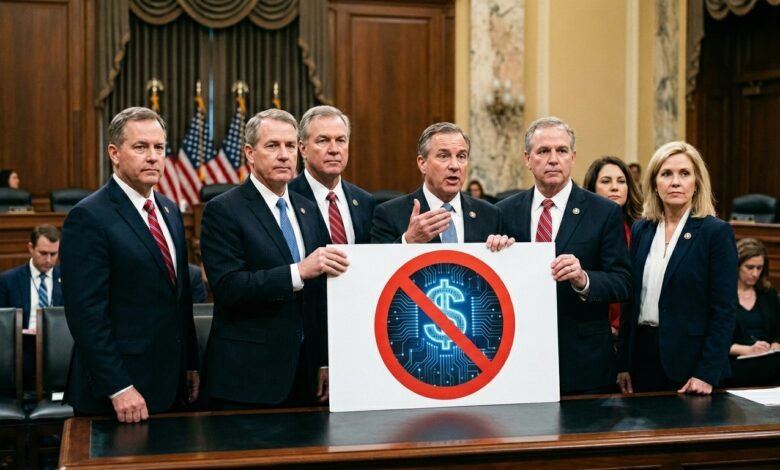
The debate surrounding a potential United States central bank digital currency has intensified as House Republicans seek indefinite block on U.S. CBDC plans through new legislative efforts. The proposal reflects growing concerns among conservative lawmakers who argue that a government-issued digital dollar could threaten financial privacy, expand federal surveillance powers, and disrupt the traditional banking system.
A Central Bank Digital Currency (CBDC) is a digital form of sovereign money issued and controlled by a nation’s central bank. While countries such as China, India, and several European nations continue exploring or piloting digital currencies, the United States remains divided on whether a digital dollar would benefit the economy or create long-term risks for citizens and businesses.
The recent Republican-led push signals a broader ideological battle over government involvement in financial systems, cryptocurrency regulation, and the future of digital payments. Supporters of the proposed restrictions believe the federal government should never gain direct control over Americans’ digital transactions. Critics, however, warn that completely blocking CBDC research could leave the United States behind in the rapidly evolving global financial landscape.
As discussions intensify in Washington, the implications extend beyond politics. The outcome could shape the future of banking, cryptocurrency markets, payment innovation, and America’s role in global finance for decades to come.
Why House Republicans Oppose a U.S. CBDC
The main reason House Republicans seek indefinite block on U.S. CBDC plans is rooted in concerns over privacy and government overreach. Many lawmakers fear a digital dollar controlled by the Federal Reserve could allow authorities to monitor spending behavior in unprecedented ways.
Republican legislators argue that unlike decentralized cryptocurrencies such as Bitcoin, a CBDC would give the federal government direct visibility into transactions. Critics believe this could eventually enable restrictions on purchases, account freezes, or politically motivated financial controls.
Several lawmakers have described the concept as a threat to personal freedom. They claim Americans should retain the ability to conduct financial transactions without constant oversight from central authorities. This argument has resonated strongly among privacy advocates and cryptocurrency supporters who favor decentralized financial systems.
Another concern involves the concentration of power within the Federal Reserve. Some policymakers argue that allowing the central bank to issue retail digital wallets directly to consumers could weaken commercial banks and fundamentally alter the U.S. financial structure.
The Republican position also aligns with broader skepticism toward expanding federal agencies and digital surveillance systems. For many conservatives, blocking a CBDC is part of a larger effort to limit government influence over everyday life.
Understanding What a CBDC Actually Is
To fully understand why House Republicans seek indefinite block on U.S. CBDC plans, it is important to define what a CBDC entails.
A Central Bank Digital Currency is essentially a digital version of fiat currency issued by a central bank. Unlike cryptocurrencies that operate on decentralized blockchain networks, a CBDC would remain fully controlled by the government.
The digital dollar could potentially function alongside physical cash and existing banking systems. Consumers might use CBDCs for payments, savings, transfers, and online purchases through digital wallets approved by financial authorities.
Supporters of CBDCs argue they offer several advantages. These include faster payment processing, lower transaction costs, improved financial inclusion, and enhanced payment security. Governments also believe CBDCs could modernize outdated financial infrastructure.
However, critics argue these benefits come with substantial trade-offs. A centralized digital currency system could create vulnerabilities involving cybersecurity, data privacy, and government control over monetary activity.
The United States Federal Reserve has repeatedly emphasized that no final decision has been made regarding a digital dollar. Nonetheless, ongoing research and pilot discussions continue to fuel political controversy.
The Legislative Push Against Digital Dollar Development
Recent Republican-backed legislation aims to stop the Federal Reserve from issuing a CBDC directly to individuals. Lawmakers supporting the measure believe Congress must prevent any future administration from introducing a digital dollar without explicit legislative approval.
The effort gained traction as concerns about government-controlled financial systems became a major talking point within conservative political circles. Some lawmakers referenced international examples, particularly China’s digital yuan initiative, as evidence of how CBDCs could evolve into tools for state monitoring.
By seeking an indefinite block rather than a temporary pause, Republicans are attempting to establish long-term restrictions on CBDC development. The proposed measures would limit the Federal Reserve’s authority to create retail-facing digital currency products.
Supporters of the bill argue that innovation should come from the private sector rather than federal institutions. They believe stablecoins, blockchain payment systems, and decentralized cryptocurrencies already provide digital financial alternatives without requiring government-managed currencies.
Opponents of the legislation argue that banning CBDC research outright could weaken America’s competitiveness in global finance. Some economists warn the United States risks falling behind as other major economies accelerate digital currency development.
Privacy Concerns Driving the Debate
One of the strongest arguments fueling the movement as House Republicans seek indefinite block on U.S. CBDC plans revolves around privacy rights.
Unlike cash transactions, digital payments inherently create data trails. Critics worry that a CBDC system could provide federal authorities with access to extensive financial information about individuals and businesses.
Privacy advocates argue that financial freedom is deeply connected to personal liberty. If every transaction becomes traceable through a government-managed system, citizens may lose the anonymity traditionally associated with cash payments.
Some lawmakers fear future administrations could implement programmable restrictions within CBDC networks. In theory, digital dollars could be designed to limit how money is spent, where it is used, or when it expires.
These concerns have become particularly influential among cryptocurrency communities, where decentralization and censorship resistance remain core principles. Many crypto supporters see CBDCs as fundamentally incompatible with the ideals that inspired blockchain technology.
Federal Reserve officials have attempted to ease these fears by stating that any U.S. CBDC would likely include privacy protections. Nevertheless, skepticism remains widespread among conservative lawmakers and digital asset advocates.
The Impact on Cryptocurrency Markets
The political battle surrounding CBDCs could significantly affect cryptocurrency adoption and market sentiment.
When House Republicans seek indefinite block on U.S. CBDC plans, many cryptocurrency enthusiasts interpret the move as supportive of decentralized digital assets. Bitcoin proponents often argue that decentralized cryptocurrencies provide a better alternative to government-issued digital money.
A blocked CBDC initiative could create more space for private-sector innovation within the crypto industry. Stablecoin issuers, blockchain payment companies, and decentralized finance platforms may benefit if the federal government avoids launching its own digital currency.
However, some analysts believe a U.S. CBDC could actually increase mainstream awareness and adoption of blockchain-based technologies. Government involvement might accelerate digital payment infrastructure development and normalize digital asset usage.
The debate also influences investor perception. Markets often respond positively when policymakers appear supportive of decentralized cryptocurrencies rather than restrictive centralized alternatives.
At the same time, regulatory uncertainty continues to create volatility. Investors remain closely focused on how Congress and federal agencies will shape future digital asset policies.
How Other Countries Are Approaching CBDCs
The United States is not alone in evaluating central bank digital currencies. Around the world, governments are experimenting with digital money systems designed to modernize payments and strengthen monetary control.
China has emerged as one of the most advanced nations in CBDC development through its digital yuan project. The Chinese government has conducted extensive pilot programs across multiple cities and integrated digital currency payments into everyday commerce.
The European Central Bank is also exploring a digital euro initiative aimed at improving cross-border payments and maintaining monetary sovereignty in an increasingly digital economy.
India has launched pilot programs for its digital rupee, while countries including Brazil, Nigeria, and Sweden continue testing various CBDC models.
As House Republicans seek indefinite block on U.S. CBDC plans, some experts warn the United States may lose influence in shaping global digital finance standards. They argue that international payment systems could eventually shift toward CBDC-based networks dominated by rival economies.
Others counter that America’s strength lies in private-sector innovation rather than centralized government-controlled currency systems. They believe the U.S. can maintain financial leadership through stablecoins, fintech development, and blockchain innovation without introducing a CBDC.
Federal Reserve’s Position on a Digital Dollar
The Federal Reserve has maintained a cautious approach regarding CBDC development. Officials repeatedly emphasize that no digital dollar will be launched without broad political support and congressional approval.
The central bank has focused primarily on research, discussion papers, and consultation with financial experts. Federal Reserve leaders have stated that understanding the risks and opportunities associated with digital currencies remains essential as global financial systems evolve.
Despite these assurances, critics remain wary. The fact that research continues at all is enough to concern lawmakers determined to stop potential future implementation.
Federal Reserve representatives argue that a CBDC could improve payment efficiency and help preserve the global role of the U.S. dollar. They also stress that careful design could address privacy and cybersecurity concerns.
Still, the political divide surrounding the issue continues to deepen. Republicans pushing for an indefinite block believe preventive legislation is necessary before development progresses further.
Potential Economic Consequences of Blocking a CBDC
The decision to halt or indefinitely block CBDC development could have long-term economic implications for the United States.
Supporters of the Republican position argue that preventing a government-controlled digital currency protects financial freedom and avoids systemic risks associated with centralized payment systems.
They believe innovation should remain decentralized and market-driven. In their view, private fintech firms and blockchain companies are better positioned to develop secure and efficient digital payment solutions.
However, opponents argue that refusing to pursue CBDC technology may weaken the dollar’s dominance in international finance. If competing economies establish widely adopted digital currencies first, global payment networks could gradually shift away from dollar-based systems.
There are also concerns about financial inclusion. Some policymakers believe CBDCs could provide low-cost banking access to underserved populations lacking traditional financial services.
The broader economic impact will largely depend on how digital finance evolves over the coming decade. Whether decentralized cryptocurrencies, stablecoins, or CBDCs dominate future payment systems remains uncertain.
Political Implications Ahead of Future Elections
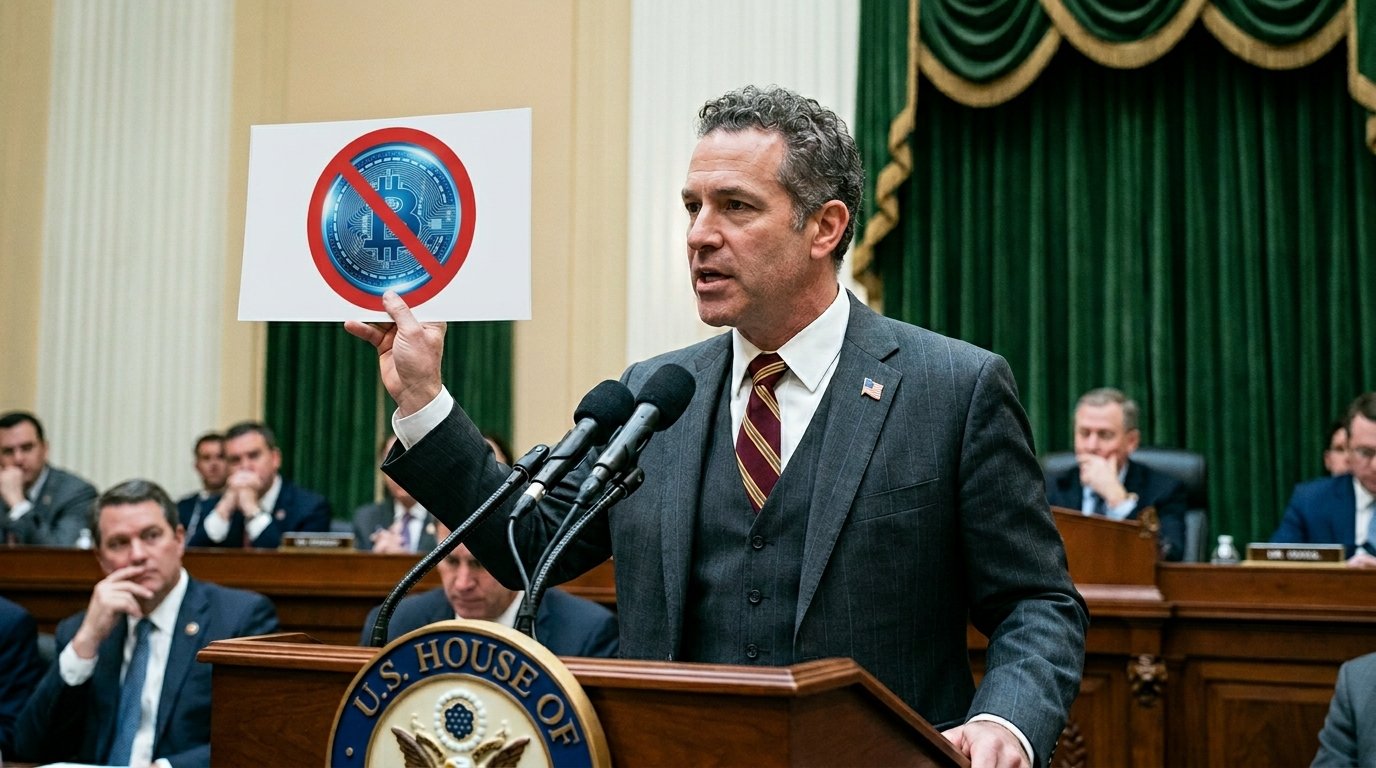
The debate over digital currencies is increasingly becoming a major political issue in the United States.
As House Republicans seek indefinite block on U.S. CBDC plans, they are also appealing to voters concerned about privacy, government surveillance, and economic freedom. The issue aligns closely with broader political themes involving federal authority and constitutional liberties.
Cryptocurrency policy has become especially important among younger voters and technology-focused communities. Candidates from both parties are beginning to incorporate digital asset positions into their campaign strategies.
Some Republican leaders have framed opposition to CBDCs as a defense of individual rights. Meanwhile, certain Democratic lawmakers argue that responsible CBDC development could improve financial infrastructure and strengthen economic competitiveness.
The outcome of upcoming elections could significantly influence the future direction of U.S. digital currency policy. Congressional control and presidential leadership will likely determine whether CBDC research continues or faces stricter legal barriers.
The Future of Digital Payments in America
Regardless of whether lawmakers succeed in blocking a CBDC, the future of payments in America is becoming increasingly digital.
Consumers are rapidly adopting mobile wallets, online banking platforms, contactless payments, and blockchain-based financial services. Traditional cash usage continues to decline as digital convenience reshapes consumer behavior.
Private-sector stablecoins tied to the U.S. dollar are already functioning as alternative digital payment tools across crypto markets and international transactions. Companies involved in blockchain finance continue investing heavily in payment innovation.
If House Republicans seek indefinite block on U.S. CBDC plans successfully, the United States may rely more heavily on private digital payment ecosystems rather than government-issued alternatives.
This could create a unique financial environment where decentralized technologies and regulated private stablecoins coexist without direct competition from a federal digital dollar.
The next few years will likely determine whether America embraces centralized digital currency systems or continues favoring market-driven innovation.
Conclusion
The effort as House Republicans seek indefinite block on U.S. CBDC plans represents far more than a technical debate about digital money. It reflects deeper ideological disagreements over privacy, financial freedom, government authority, and the future structure of the American economy.
Supporters of the proposed restrictions argue that a government-controlled digital dollar could create dangerous surveillance capabilities and undermine personal liberty. They believe decentralized financial technologies offer better alternatives without expanding federal control.
Opponents warn that completely blocking CBDC development may leave the United States behind in the global race for digital financial innovation. As nations worldwide continue exploring central bank digital currencies, the pressure on American policymakers will only increase.
The future of digital payments, cryptocurrency regulation, and monetary policy now sits at the center of an increasingly important political battle. Whether the United States ultimately embraces or rejects a digital dollar could shape global finance for generations.